

There is no greater feeling in life than experiencing the purest example of beauty. It is, as Oscar Wilde once said, the one thing time cannot harm. It’s an everlasting rainbow that never stops showing you its colors, and even when the actual act of witnessing something so gorgeous, so exquisite disappears — you still have the memory of it.
Lionel Messi, wearing the Argentina shirt, driving towards goal with the exuberant explosion of a volcano, unbothered, unconcerned with anything or anyone who even attempts to stop him, is that pure example of beauty.
Or how about his 125 goals for La Albiceleste? Each one is a seashell we pick up and carry forever. All of them came in different varieties and angles — 111 with his best friend, his trusted left foot — and they delivered with danger and aggression, poetry and music but also with a certainty that only Messi possessed and defenders and goalkeepers feared.
From his majestic drive against Bosnia and Herzegovina in the 2014 World Cup to my favorite, the piece of art against Nigeria in the 2018 edition. Nigerians will actually be glad to see the last of him, as they were one of his many, multiple, frequent victims.
Messi and Argentina are over, but the memories of what was earned will forever remain.
This touch from Messi saved Argentina 🤯 No. 100 in Best FIFA World Cup™ Moments

The achievements have been as remarkable as the highlights. Individual brilliance that made me think this tiny man surely can’t be a real human. His ultimate prize?
The World Cup in Qatar? It was achieved with guts.
When he finally won the World Cup in 2022, it was a journey of redemption, but his calmness, as remembered by his teammates, never wavered. Even after the opening loss to Saudi Arabia. Ángel Di María recalls thinking that his tranquility was so impactful, it made everyone else secure that this would be the tournament where they would become champions.
Messi and Argentina are as symbiotic as bees carrying pollen from flowers in exchange for their nectar. It was a dance that wasn’t always pretty — as we witnessed in this summer’s final — but it was theirs. It was uniquely theirs. The relationship was also very dependent on him for a long time, but thanks to Lionel Scaloni’s arrival, Argentina and Messi became more of a partnership, where Leo would eventually take them to promised lands. But the team was now also working alongside his genius, not just falling to it under his magical spell.
It wasn’t always rosy, however.
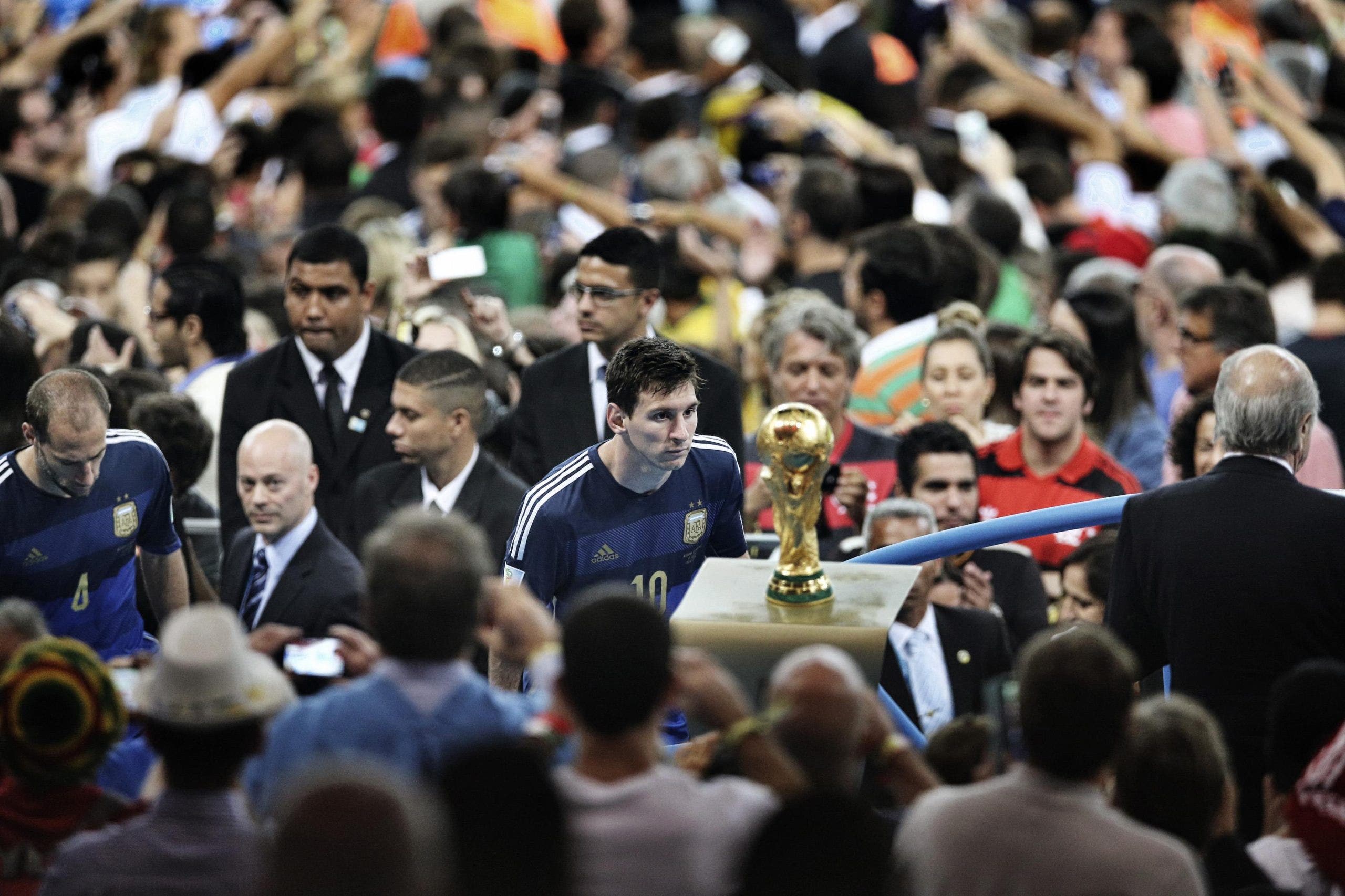
(Photo by Chengdu Economic Daily/VCG via Getty Images)
When he made his debut for the senior national team in 2005 at 18 years old, for example, Messi’s story with Argentina actually started as a nightmare as he was sent off in less than two minutes in a friendly against Hungary. Messi drove towards goal with his quintessential steam-train engine tenacity, and the Hungarian defense was unable to stop him, so the only thing he could do was hold his shirt. Messi, to try and escape, hit him in the face by accident, and it would end up being one of the most frustrating red cards, especially because it was a young Messi simply demonstrating what he would do for the next two decades.
After being sent off, Messi returned to the dressing room and was distraught, inconsolable at realizing the tragic consequences of his actions. But what that teenage Messi didn’t realize was that the Hungarian defender actually did him a favor, as that red card actually birthed a dragon — someone who realized at that moment his dribbling towards goal, his aggressive yet graceful dynamite runs would become iconic, and in that moment, he never lifted his arms again. He would just allow his granite-style composure to dismantle anything else in sight.
We also remember the struggles and the heartbreak after losing the Copa América finals to Chile, forcing him to announce an initial retirement in 2016. The country begged him not to. His people pleaded for his return, and after time, Messi did come back. The Copa América title in 2021 would catapult a sense of dominance for Argentina and, equally, Messi continued to understand not just who he was on the pitch, but who he was off it. And I think that’s what made him a World Cup champion in Qatar.
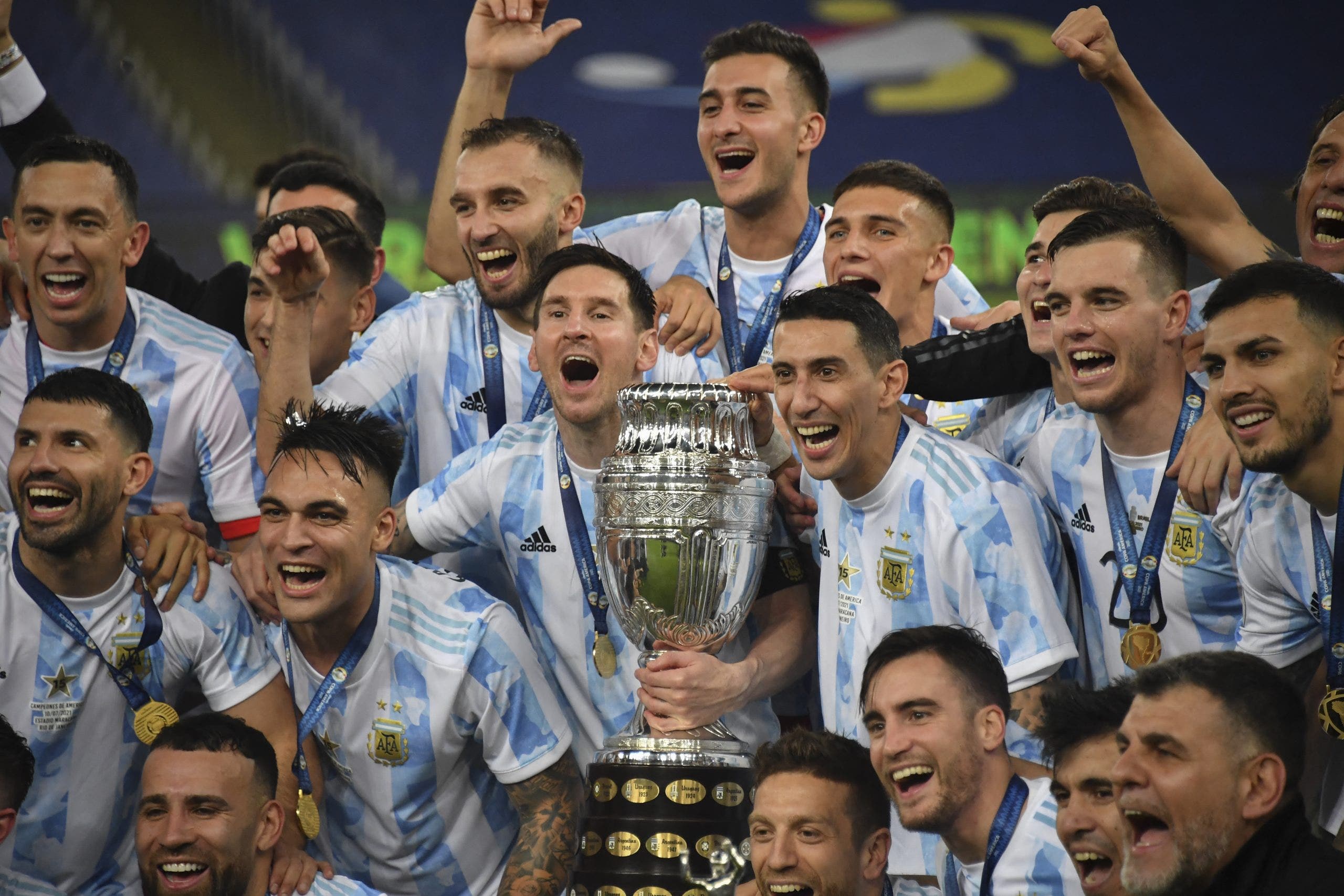
(Photo by NELSON ALMEIDA / AFP) (Photo by NELSON ALMEIDA/AFP via Getty Images)
You see, the alíen-like talents, the ability to destroy mortals on the pitch, that has always been there. But Messi, for a long time, needed to steal a page from Diego Maradona. He needed to not just win for Argentina; he needed to show that he was willing to die for it. And Messi, ever the introvert, found this harder than most, but over time, thanks to the support of his family and his own sense of maturity and ideals of what it takes to be a champion, Messi became the greatest ever because he understood the fear of losing was a necessity to win.
It’s also crucial to understand that Messi left Argentina at 13 years old and the connection his country built with him was not as pure as Maradona’s. In many ways, Messi had to earn his Argentinian-ness, despite never losing his accent or his love for Rosario and his family when he was growing up in Barcelona. I relate to this so much, as someone who left Peru at a young age, you feel weirdly in need of having to justify your identity and for Messi, a public figure, a hero and a villain in times of peril, this was even harder.
There is no discussion for me. There is no contest. Lionel Messi does things that we have never seen from any other player before, and for Argentina, he became immortal.
He could have ended it all after 2022, but I think this is the other characteristic of Messi that we often take for granted. Messi owed it to his teammates, to his country — for one last dance in 2026. He wanted to say thank you.
I think it’s important to remember that he will turn 40 years old next year, and when Lionel Messi tells you that he has given everything to Argentina — there is nothing to doubt. There is no cloud. It’s only a truth we can fully and wholeheartedly accept.
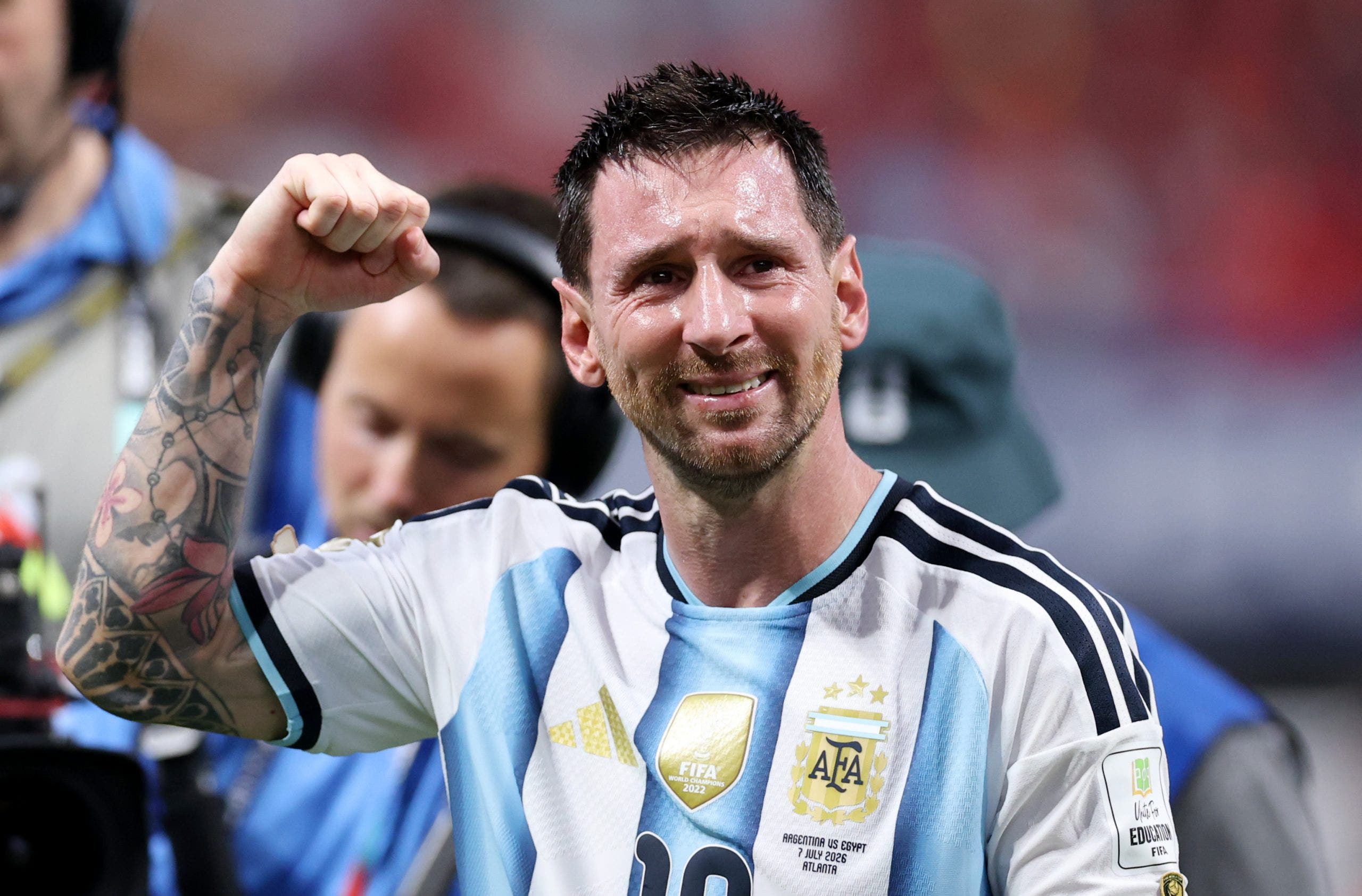
(Photo by Justin Setterfield/Getty Images)
I think the tragic death of his father also became a factor. This is the man who gave Leo everything for him to be a professional. The path of Messi’s career is next to the footprints of his father, and his passing deeply affected him. As someone who lost his father at a young age, and who also did everything for me to have a future, I can relate all too much, especially so, as let’s not forget that Messi’s immigrant story to Barcelona was thanks to the proverbial embrace, love, and direction from his father. For him not to be present at this summer’s World Cup was a thorn too deep that ailed Messi’s heart.
Playing for Argentina is just not the same without him around.
But this is an ode, not about loss, but gain, and so I want to make sure we all finish reading my humble tribute as a story of beauty, one that we all experienced for more than two decades. This is a love story of Lionel Messi, Argentina, and what he gave to the world, and if it has to come to an end, then so be it.
Let’s all remember that the true meaning of this legacy is not that it happened, but that we were all here to witness it. And most notably, we will remember it forever.
Gracias, Leo. Gracias.
Every Lionel Messi FIFA World Cup™ Goal 🐐

