

There’s a moment in every Argentina game, usually as things get uncomfortable, when 80,000 heads turn in the same direction. They fixate on a 39-year-old with graying stubble and the nonchalant gaze of a man strolling to the corner store.
It happened again on Friday night in Miami, with the reigning World Cup champions two fingertips from one of the most stunning upsets in tournament history.
Everyone was looking for Lionel Messi to respond. And Lionel Messi, as he has done for two decades, answered.
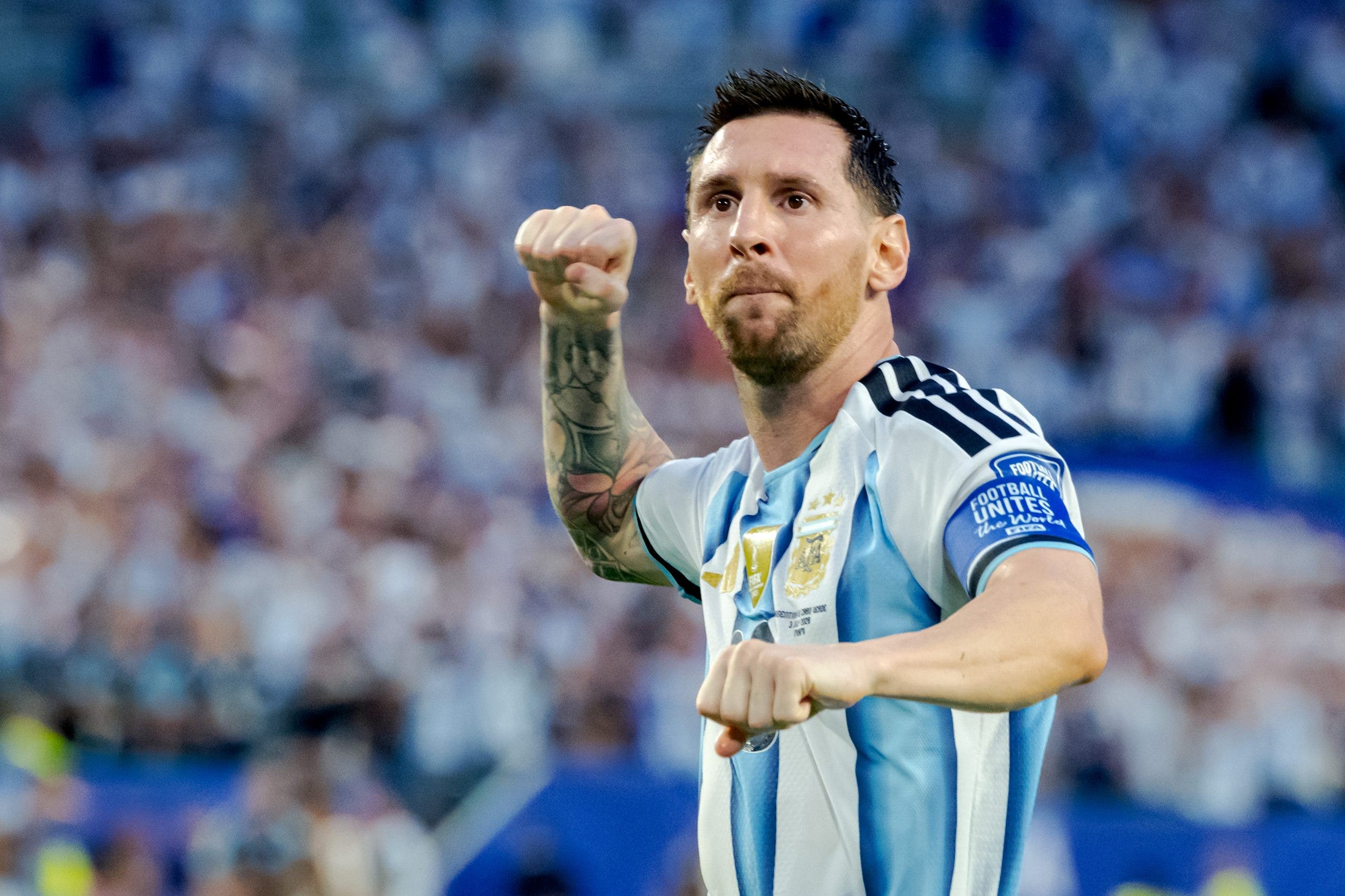
(Photo by Jussi Eskola/Soccrates/Getty Images)
His numbers at this World Cup read like a typo. Seven goals in four games, leading the Golden Boot race at an age when most of his generation are doing punditry. A hat-trick against Algeria that made him the oldest man to score one at a World Cup. A brace against Austria that carried him past Miroslav Klose and made him the all-time leading scorer in the tournament’s history. A free kick off the bench against Jordan.
Then Friday: a first touch of pure silk off a long ball, a dink over Vozinha, and a 20th goal across his six World Cup appearances. Nobody had ever reached 20. He has now scored in eight consecutive World Cup matches. (Nobody had ever done that either.)
And when Cape Verde equalized in the 103rd minute and the unthinkable was bewilderingly unfolding, it was Messi’s set-piece delivery in the 111th minute that found Cristian Romero’s head and saved the champions from embarrassment (even if it was officially ruled as an own goal).
For most of his career, Messi was measured against Diego Maradona. The comparison was always framed around one thing: Diego dragged Argentina to a World Cup in 1986, and Leo hadn’t. It was reductive and probably unfair, a career of impossible beauty held hostage by a single trophy. Then came Qatar and one of the greatest finals ever played, ending the debate in golden confetti. The asterisk became a crown.
That’s what makes this summer so remarkable. Messi has nothing left to prove. The trophy is won. The ghost is at peace. Messi could have retired into legend years ago, and instead he’s here, in his sixth World Cup, playing more matches on this stage than any man in history, breaking records that took a century to build. He isn’t hanging on. He’s growing, again, in real time.

(Photo by Carmen Mandato – FIFA/FIFA via Getty Images)
And think about how close Friday came to being the ending.
Imagine it: Lionel Messi’s final World Cup match, the last dance of the greatest player who ever lived, ending in a round of 32 defeat to Cape Verde, a nation of half a million people playing in its first tournament. The most storied international career in the history of the sport, closing with the most bizarre full stop imaginable. For eight minutes of extra time, that was the live script.
Instead, at least one more song at this final dance.
Egypt awaits in the round of 16, and beyond that, the potential for something absurd: back-to-back World Cups, a feat no nation has managed since Pelé and Brazil did so in 1962, delivered by a captain a year shy of his 40th birthday.
Maybe it ends next week. Maybe it ends with him lifting the trophy on June 19 in New Jersey. With anyone else, you’d roll your eyes at the second option. With Messi, you’ve learned better. He has spent 20 years turning the unthinkable into the inevitable, and he is doing it one more time, in the tournament that once tormented him, at an age that should make it impossible.
Argentina vs Cape Verde Highlights 🌎🏆 2026 FIFA World Cup™ | Round of 32


